

Radiographs (X-Rays) - Garden Ridge Center For Dentistry

Radiographs (X-Rays)

Here at Garden Ridge Center for Dentistry, we have a variety of digital radiographic techniques to best treat your condition. Each radiology treatment plan is customized to your specific dental needs to limit radiation exposure.

About X-Rays - Garden Ridge Center For Dentistry

About X-Rays

How do we know if there is decay (a cavity) between the teeth when it’s not visible to the naked eye? X-rays are one of the most valuable tools in the diagnostic process. We cannot “see” cavities between teeth without the help of digital x-rays. During your cleaning and check-up visits, we may take “bitewing radiographs”, “periapical radiographs”, or a “full mouth series”, depending on your specific needs. These images allow us to visualize between the teeth and around the roots of the teeth to check for cavities, bone loss, tartar build up, and pathology. 

Cavity Prevention - Garden Ridge Center For Dentistry

Cavity Prevention

Digital x-rays become even more important to check for tooth decay when a patient is not flossing or cleaning between the teeth regularly. It is always best to identify and treat cavities before they become painful, so you can avoid a dental emergency. 

For those worried about exposure, digital radiology allows us to take x-rays using 50-70% less radiation than traditional x-rays. Digital x-ray technology allows us to enlarge and sharpen images for best diagnosis and to better show you a concern.

3D Radiography - Garden Ridge Center For Dentistry

3D Radiography

We also offer 3D radiography technology with a CBCT machine. This is important for diagnosing infection, bone loss, tooth fractures, and conditions related to your sinuses, jaws, wisdom teeth, and more! It is also necessary in the implant planning process. By using a 3D image, we are able to view teeth and structures in the jaw from multiple angles. 

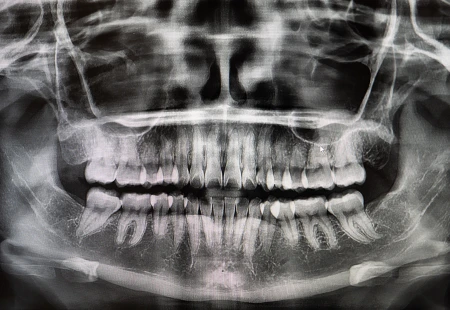
Radiology is a critical tool in the diagnosis of oral pathology. By taking panoramic style radiographs and 3D CBCT images, we are able to visualize potential bony pathology in the jaws, sinuses, and around the teeth. By maintaining records of your x-rays over time, we are able to quickly identify changes that may be cause for concern. At Garden Ridge Center for Dentistry, we use x-ray technology to treat our patients in a safe and comprehensive manner.

Frequently Asked Questions about X-Rays

Dental X-rays don’t technically “expire,” but the images are typically valid for diagnostic use for about one to two years, depending on your oral health needs. For most patients, new dental X-rays are recommended once a year to detect cavities, gum disease, bone loss, or other dental issues that may not be visible during a regular exam. Some patients at higher risk for dental problems may need X-rays more frequently. At Garden Ridge Center of Dentistry, we use modern, low-radiation digital X-rays to safely monitor changes in your teeth and gums and ensure you get the best care for your smile.

Yes, you can get dental X-rays if you have face piercings, but it’s usually best to remove them beforehand if possible. Metal piercings near your mouth or jaw can interfere with the clarity of your X-ray images, sometimes creating shadows or distortions that make it harder for your dentist to detect problems like cavities, bone loss, or infections. At Garden Ridge Center of Dentistry, our team will guide you on whether removing your piercing temporarily is necessary to get the clearest, most accurate X-rays. Your comfort and safety are always our top priority!

There are several types of dental X-rays, each designed to capture different parts of your teeth and jaw to help diagnose and monitor your oral health:

  • Bitewing radiographs show the upper and lower back teeth in one area of your mouth. They help your dentist detect cavities between teeth and check bone levels for signs of gum disease.
  • Periapical radiographs focus on the entire length of a single tooth, from the crown to the root and surrounding bone. They’re useful for diagnosing abscesses, cysts, or root problems.
  • Full mouth series combines multiple bitewing and periapical X-rays to give a comprehensive view of all your teeth and supporting bone structures. This is often recommended for new patients or those with significant dental concerns.

A CBCT scan, used in 3D radiography, is an advanced type of dental imaging that provides a detailed, 3D view of your teeth, jawbone, sinuses, and surrounding structures. Unlike traditional dental X-rays, which produce flat, two-dimensional images, a CBCT scan captures a full 360-degree view, allowing your dentist to see precise details from every angle. This technology is especially helpful for planning dental implants, evaluating impacted teeth, diagnosing TMJ disorders, and detecting bone loss or infections that may not be visible on standard X-rays.